

Read about four of the most widely recognised music composers.
(Go to the Comprehension Activity)
(Go to the Music Appreciation Activity)
Four of the Most Influential and Famous Composers
Bach
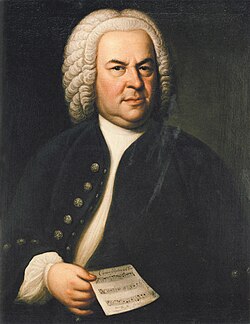
Johann Sebastian Bach (1685 – 1750) was born in Eisenach, Germany and grew up in a large family. He was one of many in his extended family who were musically inclined, and, under the tutelage of his brother, Johann Christoph, he quickly became proficient as an organist. After his formal education, Bach gained favour and found consistent employment and patronage in posts as both a musician and a composer with many influential figures of that time.
The Compositions of Bach
His contribution to works for the keyboard during the late Baroque period was significant, and he is widely thought of as one of the greatest composers of all time. Besides creating and performing a huge repertoire of sacred, instrumental and keyboard works, he consolidated the modern notion of equal temperament, where the musical scale is divided up equally, with his work, The Well-Tempered Clavier. His Brandenburg Concertos, and his Mass in B Minor are but a few examples of Bach’s many outstanding compositions. Amongst his other works are Sonatas and Partitas, and over 400 four-part Chorales. Bach’s compositions epitomise the style of the music of the period, which can be described as both ordered and complex, and often containing polyphony, where several layers of expressive melody are woven together to make a satisfactory combination of sounds.
Handel
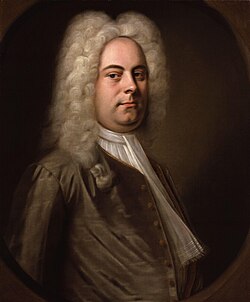
George Frideric Handel (1685-1759) was born in Germany and became a German-British Baroque composer and musician. Handel was the son of a barber-surgeon. After his definite gift for music became evident, he studied keyboard and composition under the composer Friedrich W. Zachow. He studied law at the University of Halle in 1702. After gaining some short term work as an organist, he became a violinist in the opera orchestra. At the age of 19, he wrote his first opera, Almira, and also oversaw its performance in Hamburg in January of 1705.
After traveling and composing for several years in Italy, Handel was greatly influenced and impacted by the prominent Italian composers. His fame spread, not only throughout Italy, but internationally. After receiving acclaim for his Opera Rinaldo in London, Handel was drawn to the idea of residing in England, where he wrote several more operas and enjoyed the patronage of a number of monarchs, including Queen Anne, George I and George II.
The Compositions of Handel
He was also commissioned by them to compose a number of specific works. Apart from his 42 operas, Handel also wrote many other pieces, including oratorios, cantatas, duets, sonatas and 12 organ concertos. Among his most famous compositions are his Music for the Royal Fireworks (HWV 351) which is a suite in D major for wind instruments, and his English-language oratorio, Messiah (HWV 56). He is widely regarded as one of the most gifted musicians and composers of the Baroque period.
Beethoven
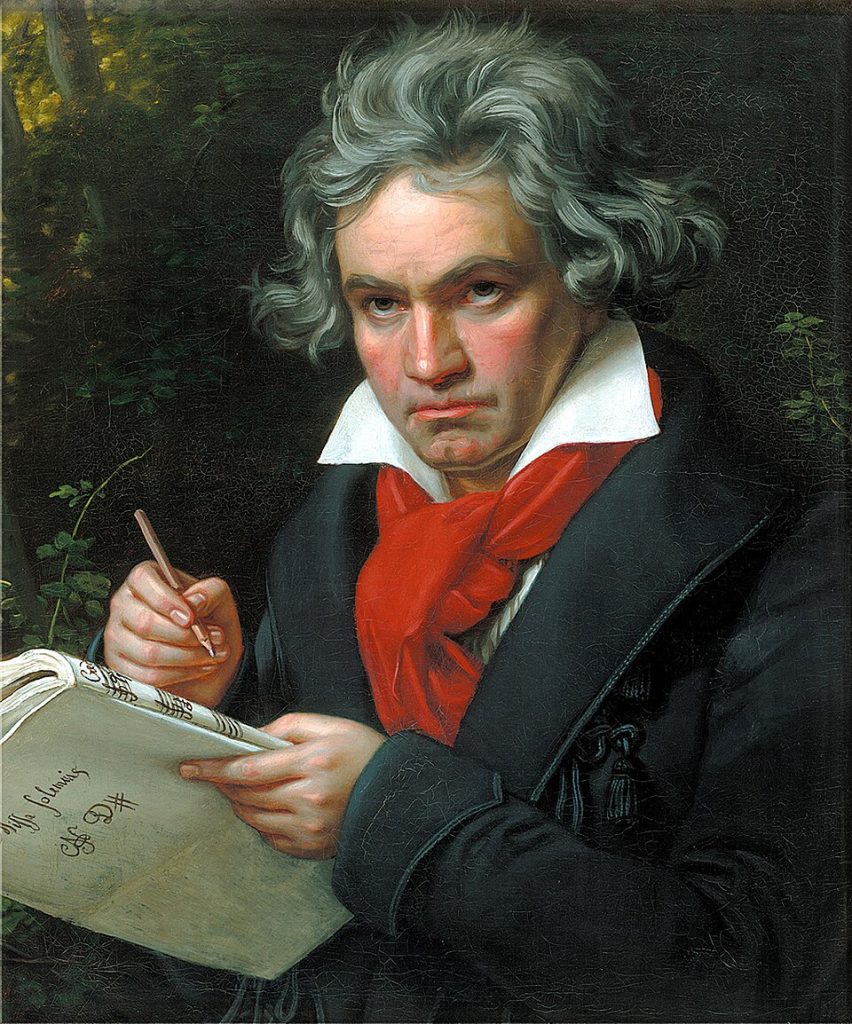
Ludwig van Beethoven (1770 – 1827) was a German composer, conductor, and pianist. Widely regarded as one of the greatest composers of Western music, his work spans between the Classical and Romantic periods of music. Beethoven had the advantage of being exposed to music from a young age. Initially he was taught by his father, and later by Neefe. Beethoven gained a reputation as a virtuoso pianist.
The Compositions of Beethoven
By the very nature and style of his later works he contributed to the expansion of instrumental forms, including the symphony, the sonata and the string quartet. His style has been called profoundly emotional and deep, and bridges the classical and romantic periods. Being such a talented composer and pianist, Beethoven attracted interest and patronage. Apparently, on one occasion he was admired by Mozart for his ability to improvise. However, in the last ten years of his life he suffered from almost complete deafness. Nevertheless, during this period he still continued to compose. Some of his works include the four movement Symphony No. 3 – the Eroica Symphony (1803-1804), Ten Sonatas for Violin and Piano (1812), and Six Bagatelles (1824).
Chopin
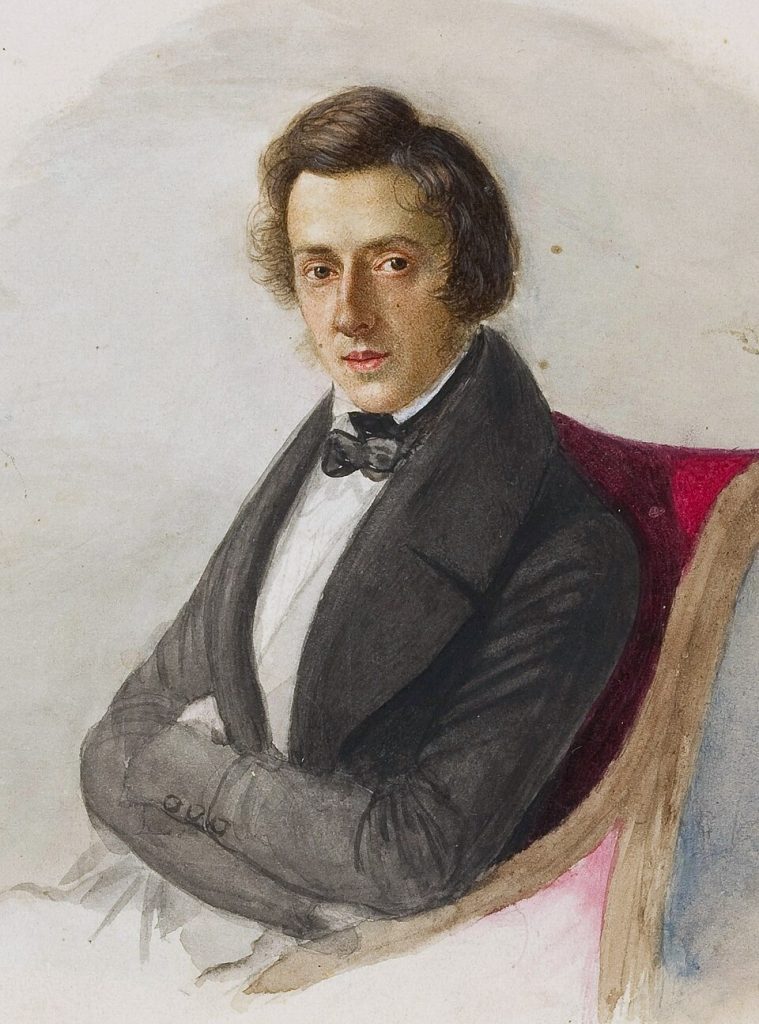
Frédéric Chopin (1810-1849) was born in Poland and grew up in Warsaw, Poland. He was a child prodigy. He also composed a large amount of music before the age of 20. Chopin wrote A Polonaise in G Minor at age 7. The Russian grand duke, Constantine, had his military band play a march which Chopin had written in a parade. Chopin also wrote various polonaises, mazurkas, variations, and a rondo. From the age of 16 onwards, he studied at the Warsaw Conservatory of Music. The Polish composer Józef Elsner, who was the Director at the Conservatory, had previously been teaching the young Chopin theory, and was careful to continue to foster his natural talent. In 1830, Chopin left Poland and moved to Paris, France. After studying music, Chopin made a living from teaching the piano and selling his own compositions. In Paris, he gained the admiration of key contemporaries like Robert Schumann and formed a close friendship with Franz Liszt.
The Compositions of Chopin
Chopin became known for his waltzes, nocturnes and preludes, and many other outstanding works. All of his compositions feature the piano, though he did write concertos and songs. His influences include Polish folk music and the contemporary classical style which had characterised the music of Mozart and Bach.
Questions with Answers on the above descriptions of the musicians’ lives.
- Where was Bach born? a) France. b) Germany. c) The Netherlands. d) England.
Show Answer
b) Germany.
- Which of the following statements would apply to Bach? a) Bach left us a rich musical legacy. b) Bach wrote mainly keyboard works. c) Bach’s work became popular after he passed away. d) Bach reached the height of his career while living in Italy.
Show Answer
a) Bach left us a rich musical legacy.
- Bach’s work consolidated the modern notion of equal temperament which is where…? a) One composes with a particular order of keys. b) All the melodies in a piece are repeated at least once. c) Instruments are considered to be equally important. d) The musical scale is divided up equally.
Show Answer
d) The musical scale is divided up equally.
- Which composer wrote Music for the Royal Fireworks (HWV 351). a) Bach. b) Handel. c) Beethoven. d) Chopin.
Show Answer
b) Handel.
- Which of the musicians described above studied law? a) Bach. b) Beethoven. c) Handel. d) Chopin.
Show Answer
c) Handel.
- Which of the following statements would apply to Handel? a) Handel wrote mainly for the orchestra. b) Handel was better at performing than composing. c) Handel’s compositional style was unconventional. d) Handel enjoyed the patronage of a number of monarchs.
Show Answer
d) Handel enjoyed the patronage of a number of monarchs.
- What two musical styles do Beethoven’s compositions exemplify? a) The styles of the medieval and Baroque periods. b) The styles of the Baroque and the Classical period. c) The styles of the Classical and the Romantic period. d) The styles of the Romantic period and the Modern 20th century period.
Show Answer
c) The styles of the Classical and the Romantic period.
- What effect did Beethoven’s deafness have on his career as a musician and a composer? a) He continued to write a number of outstanding compositions. b) He decided to retire. c) He became less productive. d) He focused more on singing.
Show Answer
a) He continued to write a number of outstanding compositions.
- Where was Chopin born? a) In Italy. b) In England. c) In France. d) In Poland.
Show Answer
d) In Poland.
- What were the main influences of Chopin’s compositional style? a) Renaissance music. b) Polish folk music and the contemporary classical style. c) Beethoven’s and Liszt’s music. d) Handel’s music.
Show Answer
b) Polish folk music and the contemporary classical style.
Music Appreciation Activity
Listen to a piece of music (which you choose) written by one of the composers above. Listen to the piece of music, or a portion of it several times. In your own words (150-300 words) describe this piece of music (by either Bach, Handel, Beethoven or Chopin). Describe the way the music sounds, and do your best to describe the style used. Explain the aesthetic effect this has on the listener. Explain the things which you think the composer has successfully achieved or communicated through this music?