

Read about five of the most widely recognised artists.
Do the Art Appreciation Activity
Leonardo da Vinci (1452 – 1519) was born in Italy, and was a painter, sculptor, theorist, scientist, architect, inventor and engineer. While best known for his paintings, he is also known for the many notes, sketches, and illustrations which he made. His notebooks contain notes on many subjects, including anatomy, astronomy, botany and cartography. Da Vinci is thought of as a genius who contributed greatly to the development of European art. One of his contemporaries was Michelangelo.
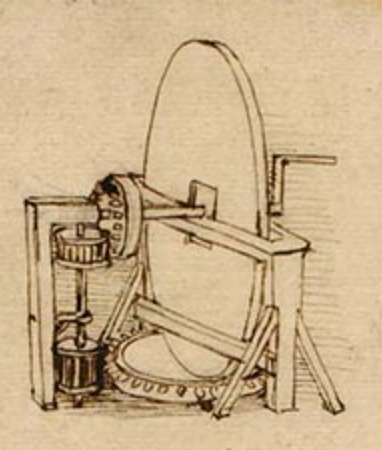
Amongst the inventions of da Vinci, that were thought to have been adopted into people’s everyday lives for practical use, are the strut bridge, a lens-grinding machine and the automated bobbin winder. His machine for grinding lenses (pictured below) utilised a rotating wheel which was operated by hand and used gears to grind glass, crystal or other material.
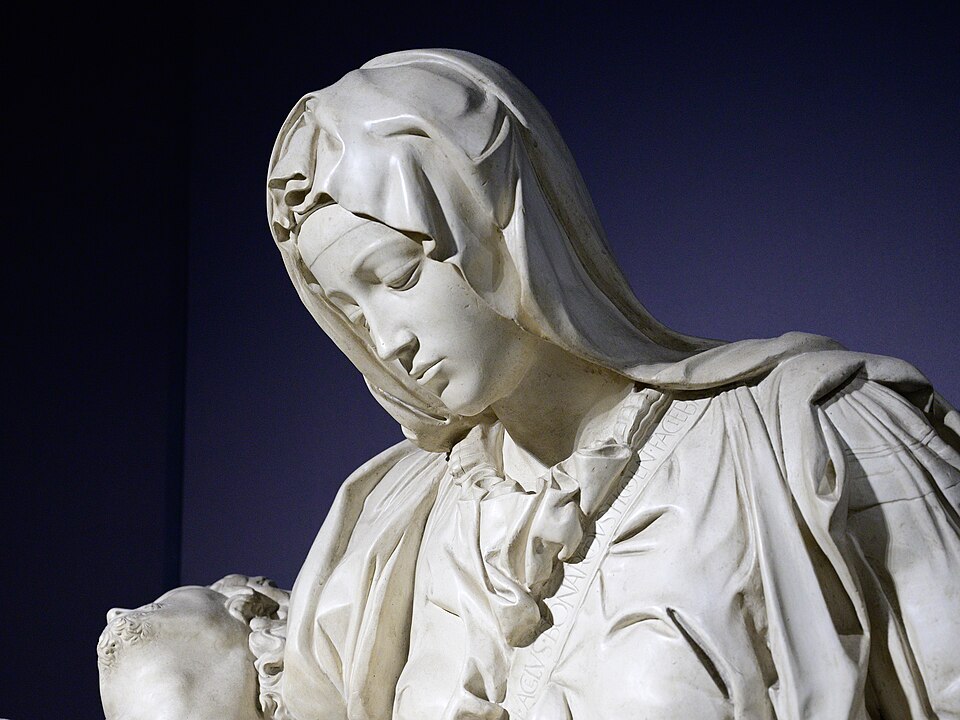
Michelangelo Simoni (1475 – 1564), known as Michelangelo, was born in Italy. He was a sculptor, painter, architect and poet. He was influenced by the artworks of classical antiquity and his contribution to Western art was significant. Within his works, Michelangelo demonstrated a depth of natural talent combined with an artistic mastery in a range of forms. The volume and quality of his work which remains, including elaborate frescos, detailed sketches, and architectural plans, is extensive, and its quality attests to his extraordinary level of accomplishment as an artist. Michelangelo was famous in his lifetime. A sculpture by Michelangelo, named The Pietà (shown below), is an example of the famous artist’s work and shows his mastery of sculpting.
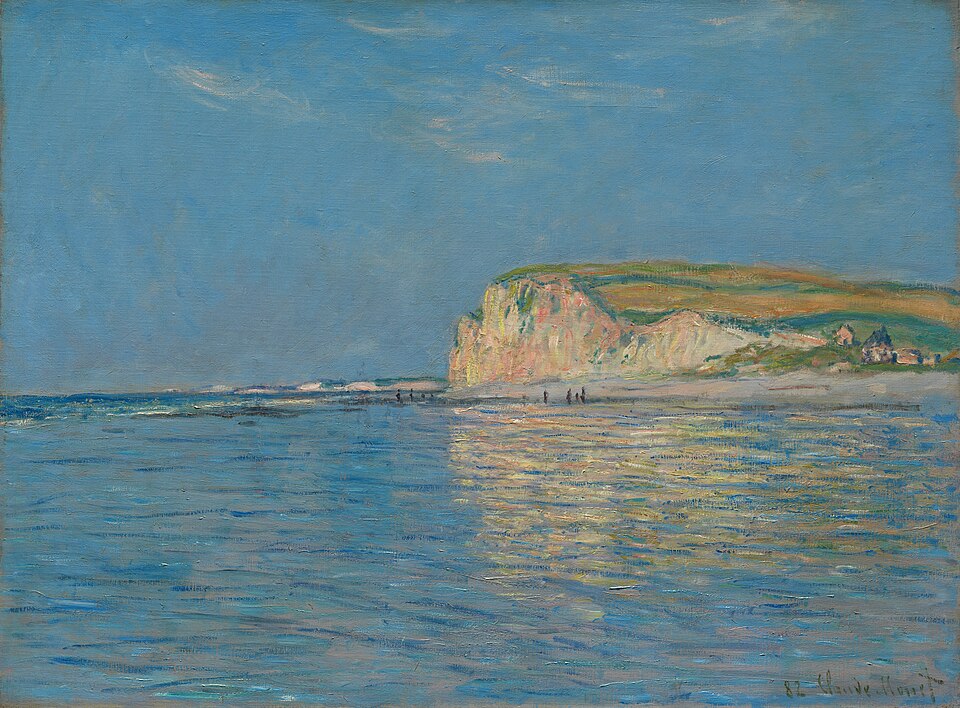
Oscar-Claude Monet (1840 – 1926) was born in Paris, France. He was a founder of Impressionism, who focused mainly on the subjects of people, landscapes and nature. About 250 of his oil paintings feature the water lilies which grew in his water garden at his home in Giverny. His career was long. He assiduously produced a large number of impressionistic works which conveyed nature and life with bold and visible brushstrokes. His work was characterised by intentional applications of colours and shades. Monet is considered the founder of Impressionism. Monet and other like-minded artists, who believed in these impressionist ideals, gathered and produced the first Impressionist Exhibition. An example of Monet’s work is pictured below.
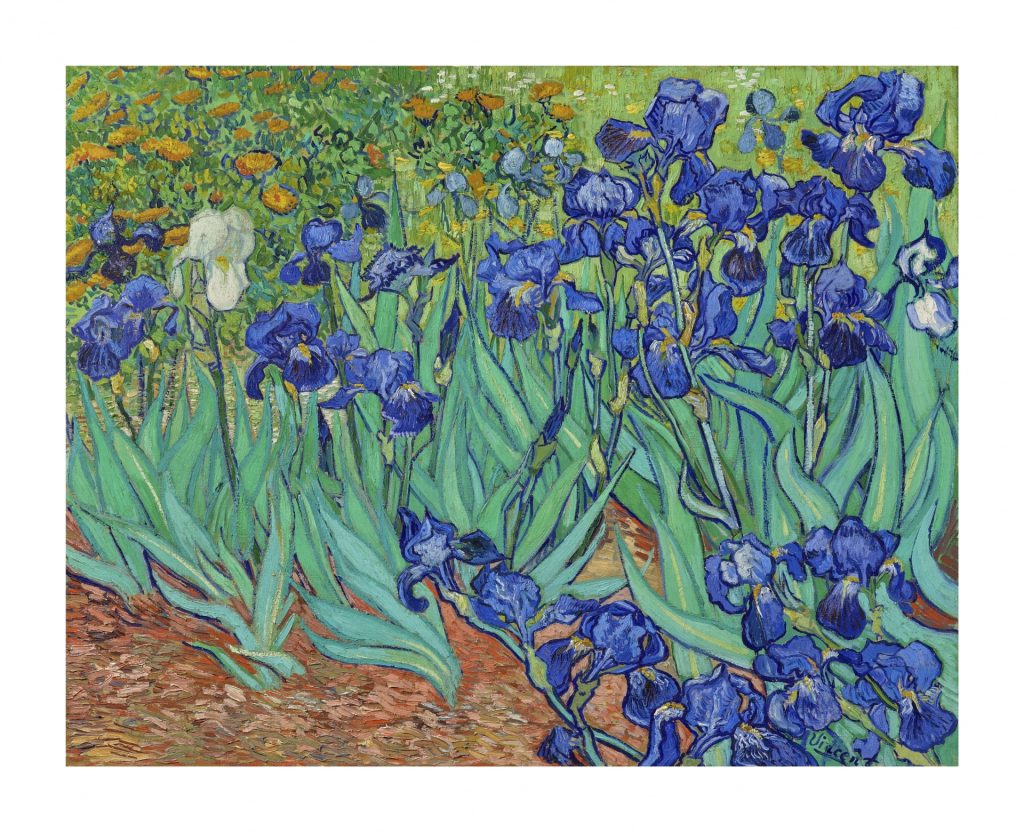
Vincent van Gogh (1853 – 1890) was born in the Netherlands, and was a painter who became famous for his contribution to Western art. In his short life he created thousands of artworks, including over 800 oil paintings. His main subjects were portraits, landscapes, and still lifes. In his later works, he typically employed vivid colours and bold brushstrokes with dramatic movements. Van Gogh was never truly successful in his lifetime and was believed to have suffered from poverty and mental illness and to have eventually committed suicide at the age of 37. He completed his famous painting, Irises, painting in 1889 (pictured below).
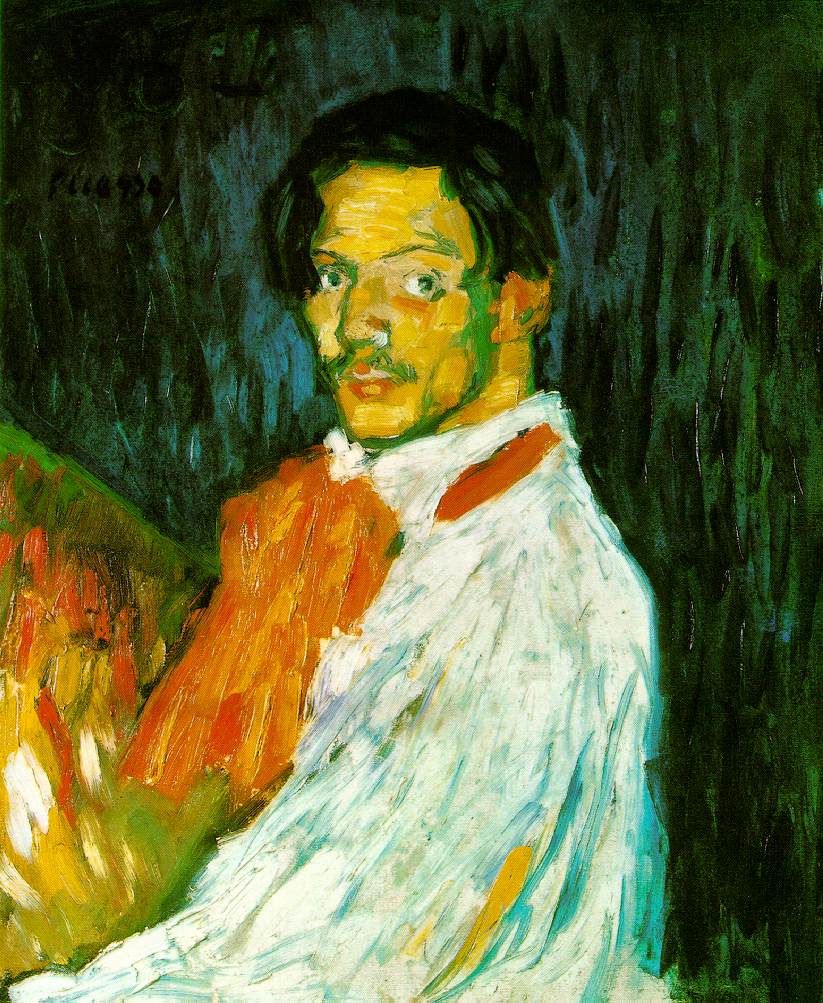
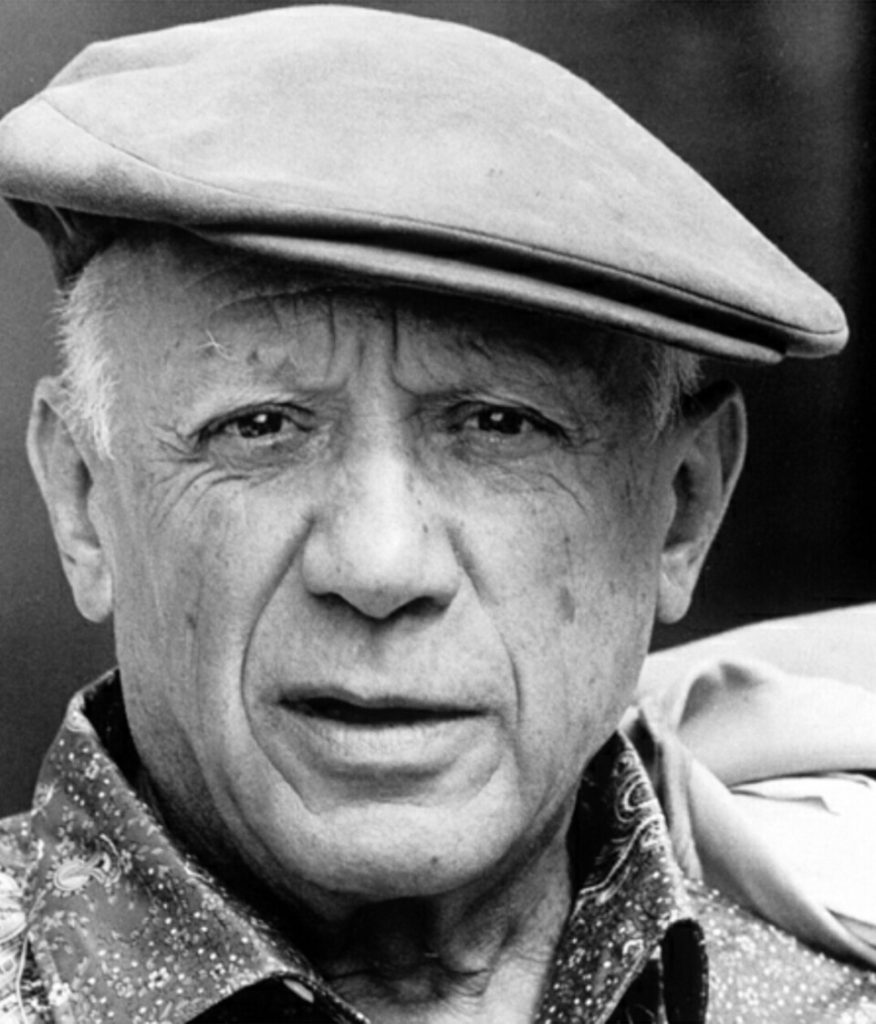
Pablo Picasso (1881 – 1973) was born in Spain and mainly lived in France. He was a painter and sculptor, and subsequently became one of the most influential figures in 20th century art. He was a naturally gifted artist, who was equally at ease with a wide variety of traditional and modern styles. He helped to pioneer and co-found movements such as Cubism and collage. Over a career spanning more than seven decades, he contributed significantly to the direction of modern art. Below is an oil-on-canvas self-portrait which was painted by Picasso in 1901.
Pablo Picasso, 1969 (pictured below).
Questions with Answers on the above descriptions of the artists’ lives.
- Which country was Leonardo da Vinci (1452 – 1519) born in? a) Italy b) France. c) New Zealand. d) Scotland.
Show Answer
a) Italy.
- How would you describe the approach of da Vinci from the summary of his life above? a) He focused mainly on painting. b) He excelled in many disciplines. c) Through working at other jobs he was able to support his artistic pursuits. d) He was never successful in his lifetime.
Show Answer
b) He excelled in many disciplines.
- Michelangelo (1475 – 1564) was a younger contemporary of Leonardo da Vinci. True or False?
Show Answer
True.
- Many of Michelangelo’s artworks are still in existence. True or False?
Show Answer
c) True.
- Michelangelo’s style was influenced by which of the following? a) Artistic approaches of Islanders. b) The natural world. c) The artworks of classical antiquity. d) Impressionism.
Show Answer
c) The artworks of classical antiquity.
- Monet (1840 – 1926) was born in? a) France. b) Italy. c) New Zealand. d) Scotland.
Show Answer
a) France.
- Monet is recognised as which of the following? a) The first of the modern artists. b) An expert in painting the natural world. c) As a promoter of humanistic ideals. d) The Founder of Impressionism.
Show Answer
d) The Founder of Impressionism.
- Which of the following statements is true of Vincent van Gogh (1853 – 1890) a) Through his artistic gifts he became successful. b) Through perseverance he became successful. c) He was never truly successful in his lifetime. d) Though he did not create a lot of artworks, he became popular.
Show Answer
c) He was never truly successful in his lifetime.
- Picasso (1881 – 1973) was both a painter and a sculptor. True or False?
Show Answer
True.
- Picasso is considered a co-founder of which of the following styles of art? a) Realism. b) Neo-classicism and expressionism c) Modernism and abstract art. d) Cubism and collage.
Show Answer
d) Cubism and collage.
Art Appreciation Activity
In your own words (150-300 words) describe one of the artworks shown above (by either Monet, Michelangelo, van Gogh or Picasso). Try to describe the way the painting or sculpture looks, and why, and the style used. Try to explain the effects these things might have on the viewer. Explain the things which you think the artist has successfully achieved or communicated, or wanted to achieve or communicate through this painting or sculpture?